This is the first post on Poland with a Plan. We start our new adventure on Monday Subscribe below to get notified when I post new updates.
Uprisings
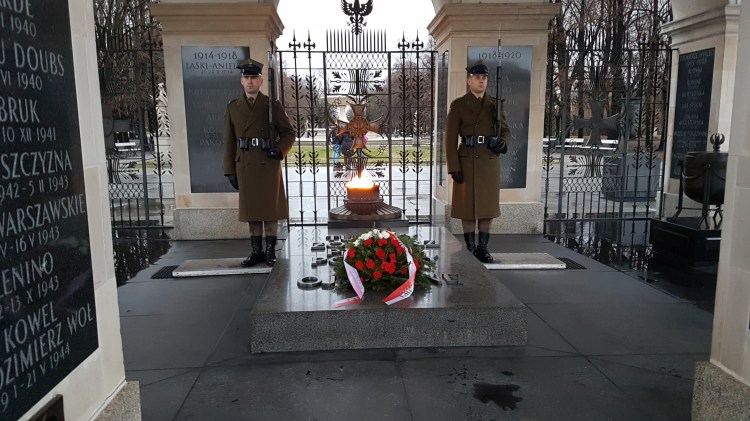
So by now we are convinced that Warsaw and the Warsovians are key players in our history – cruelly pushed to one side by the narratives we’ve been taught.
We were brought up on the movements of nationalism in the 19th century, the empires than formed about the central European powers, the rise of the USA, and the USSR and China. And the wars of the 20th Century, both hot and cold. all titanic and universal.
Poland features, but she’s a bit player, a Mcguffin – key to the plot but not in on the action. A Rosencrantz or a Guildenstern.
We learn fast (for a group of older actors that we are). Poland with its salt mines and its kings, its submersion in the Austro Hungarian Empire, its emergence as free state after 1918, and then its sacrifice in the Second World War.
Size is not everything. But in the context of her sacrifice, her almost complete innocence in the face of invasion, her people’s courage and indominatability, and her final humiliation by the allies in general and the Soviets in particular, Poland is a big country indeed.
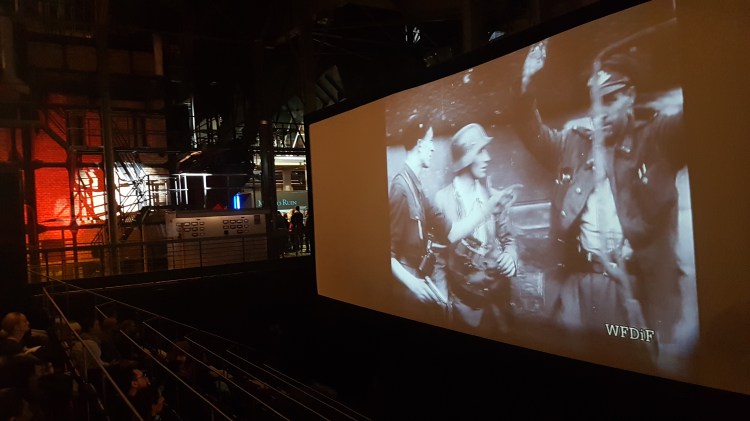
We visit the Muzeum Powstania Warszawskiego – the Uprising Museum – which is in a converted tram power station. The designers have created a breathtaking experience that immerses the visitor in every aspect of this doomed struggle. From the strategies employed, the role of the government in exile, the use of sewers as communication channels, the personal stories, the attempts by the RAF to supply the defenders, the weapons they designed and used, and were used against them, the treachery and cynicism of the Red Army, and the total destruction of the city following defeat. You will not meet a more involving and better told story of that War anywhere. This museum alone is a reason to visit Poland’s capital city. It is told in Polish and English. There is no excuse. Ryanair will get you there for the price of a round of drinks.
The post war period has been kinder. The Russians, having allowed the Germans to destroy Poland’s Home Government, rebuilt it as a communist puppet state but allowed its Catholic faith to persist, and poured money into reconstructing its buildings and productiveness.
We saw the massive avenues and the workers’ apartments they left behind them, and the new developments that EU membership has brought.
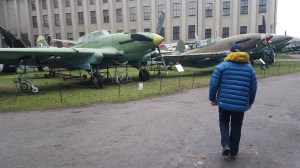
 We also enjoyed our look at the Russian military aircraft and tanks which form a crumbling display outside the Army Museum. There is something exciting in the steam punk arsenal of Migs, Petlyakovs and Sukhois that corrode peacefully in the icy Polish winter. This is the ordnance that defeated Hitler, and would have helped destroy the world, had the cold war turned hot.
Next door, the former Communist Party headquarters houses a slick real ale bar, a former showroom for Ferraris and a nice sandwicherie for lunch. What more could you say about Poland today?
Warsaw and the Zuk
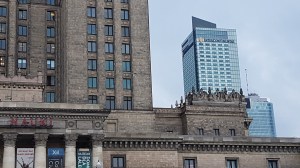
We arrive in Warsaw to a city that appeared to be the greyest on earth. Apart from an imposing tower with gothic touches and phone masts about its highest point. Our hotel, the Regent, was a 260 bed conference centre venue next to the Russian Embassy, a late Soviet era mausoleum, and a considerable distance from the centre. That night, we ate in the hotel, not feeling like a stroll into the distant city – even though the old town, according to the guide books, promised to be worthy of the UNESCO world heritage status for a reconstructed town.
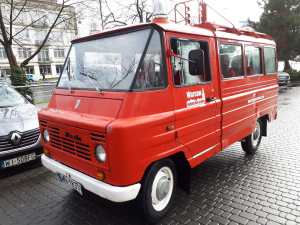
The next day, discipline was already exerting itself, and after disappointing pizzas we had booked ourselves on a tour in an 8 seater Zuk ex-fire department minibus, determined to explore the grimmest secrets of Poland’s capital. Arturo, our driver, greeted us with handshakes and bonhomie, and explaining the exotic starting procedures that got the 30 year-old Zuk underway, promised us a visit to the city’s hidden past, and lunch in an equally authentic street cafe – as much music to our ears as the egalitarian roar of the socialist engine beneath our feet.
From the moment he began to talk, Artie’s Warsaw began to live in our imaginations, and its tragic history in the second world war to take root – a story the equal of the cruelty and slaughter of the camps, and one which should place the country and its resistance against a brutal tyranny in the foremost ranks of nations.
To listen to Artie – friendly, knowledgeable, full of humour and engagement – is to realise how it is possible for the spirit of a people to survive and build again a country, and a culture, after others have attempted to erase it.
He takes us first to the Palace of Culture and Science Building – Stalin’s gift to the city in 1953, and based on the Empire State building, with vernacular frills. This was the tower that hadgreeted us on our arrival. Controversy surrounded the building after Poland escaped from the iron curtain, with opinion divided as whether it should have been demolished as a symbol of Soviet oppression. Wiser counsel prevailed so this part of the city is not entirely dominated by Novotels, T K Maxxes and the blank glass offices of enterprise culture.
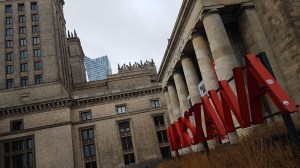
Close to, and inside, the building is well made, with much stone and marble – an attempt to celebrate the role of Socialism in the lives of the people. Today, it’s big and cosy. Its theatres thrive, its bars and restaurants offer lunch and places to meet, and innumerable artists and tutors use its rooms and offices.
Communism had its uses, and may not have been the cinema villain that Reagan depicted, but you have to remember that Soviet Russia was every bit Poland’s enemy and oppressor. Warsaw’s brutalist realism- its massive blocks of offices and flats built to replace the ruins of the war – may seem insensitive and impersonal – but they are no worse that the flats and high rises of British cites, built at the same time. They were a quick fix for a serious crisis in housing and places to work. Could capitalism have stepped up to the plate, as effectively? These buildings still stand. We’re tearing ours down, or gerrymandering their refurbishment as potential death traps.
Outside the building a vast hole fills the space in front – and a gallery of modern art is planned. The issue that has faced the city in redevelopement, post Soviet era, has been ownership – so much of the city was destroyed and its current owners with it. Now claims are being made about who has the right to build on the land.The courts and the government are hammering out a compensation deal, so more soaring symbols of the new future can turn their towering faces to the sun.
We are about to exit the European Union, and Artie expresses his sadness that we should be leaving. The process has turned the real issues of membership or non-membership into a couldn’t- care-less get-it-over-with joke – a view that most of our group share. I tell Artie that for me it’s a personal tragedy – to see Europe divided again. We both acknowledge that the ideal of the EU was based on a continent living in peace after terrible conflict – and that alone is reason enough to make a marriage work.
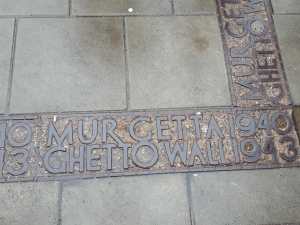 It’s the Ghetto next, and Artie makes us look down – and there in the pavement is the brass line that demarcates the boundary between the Poles and their Jewish neighbours that the Nazis drew up. He takes us to the street that split the ghetto in two, and the columns that mark the footbridge that allowed Jews to pass from one area into the other. Nearby, the remains of the last wall standing is protected and plaqued – and is being incorporated into a new delvelopment.
Then it’s over to Praga, on the other side of the Vistula – the other Warsaw where living is cheaper, and the bruisling are rougher. It’s also here, as we are about to learn, that the Red Army, arriving in 1945, waited while the Nazis crushed the uprising that had fought bravely for weeks – supplied by its own ingenuity and courage, while attempts to supply it from the air by the RAF largely failed.
The Nazis achieved their victory, murdered 80,000 Warsovians, and demolished the city – as Hitler decreed, as a “warning to others”. Then the Red Army moved in, and took the remains – the Home Army and its government having been liquiated.
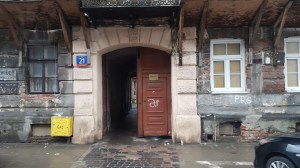
In the street in Praga where Polanski’s The Piano was filmed we took our lunch – delicious heartwarming soup and a glass of vodka.
Artie, saving the best till last, told us a little of the later, and this time successful, uprising of the Polish people, by Solidarity and the Shipyard workers of Gdansk. He spent a few days in jail for his part in that protest movement. Fortunately, the Catholic Church paid his fine, and he walked free.
The Catholic Church, his saviour on that occasion, he identifies as the reason why the Soviets never entirely dominated Poland. It was never banned, and so was tolerated as a de facto opposition. Small wonder, that, in addition to being a welcoming society, with very reasonably priced goods, it is also seriously religious. Something to contemplete as you allow the icey homemade cucumber vodka at 70% to slip down after the soup.
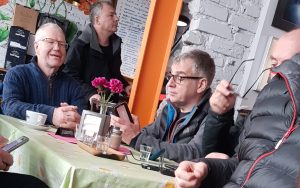
Artie’s tour, should you visit Warsaw, is a must. Otherwise you may be forced to believe that a large hotel, next to a largely unused Russian embassy, is as good as it gets. The name is on the side of the Zuk!
Auschwitz Birkenau
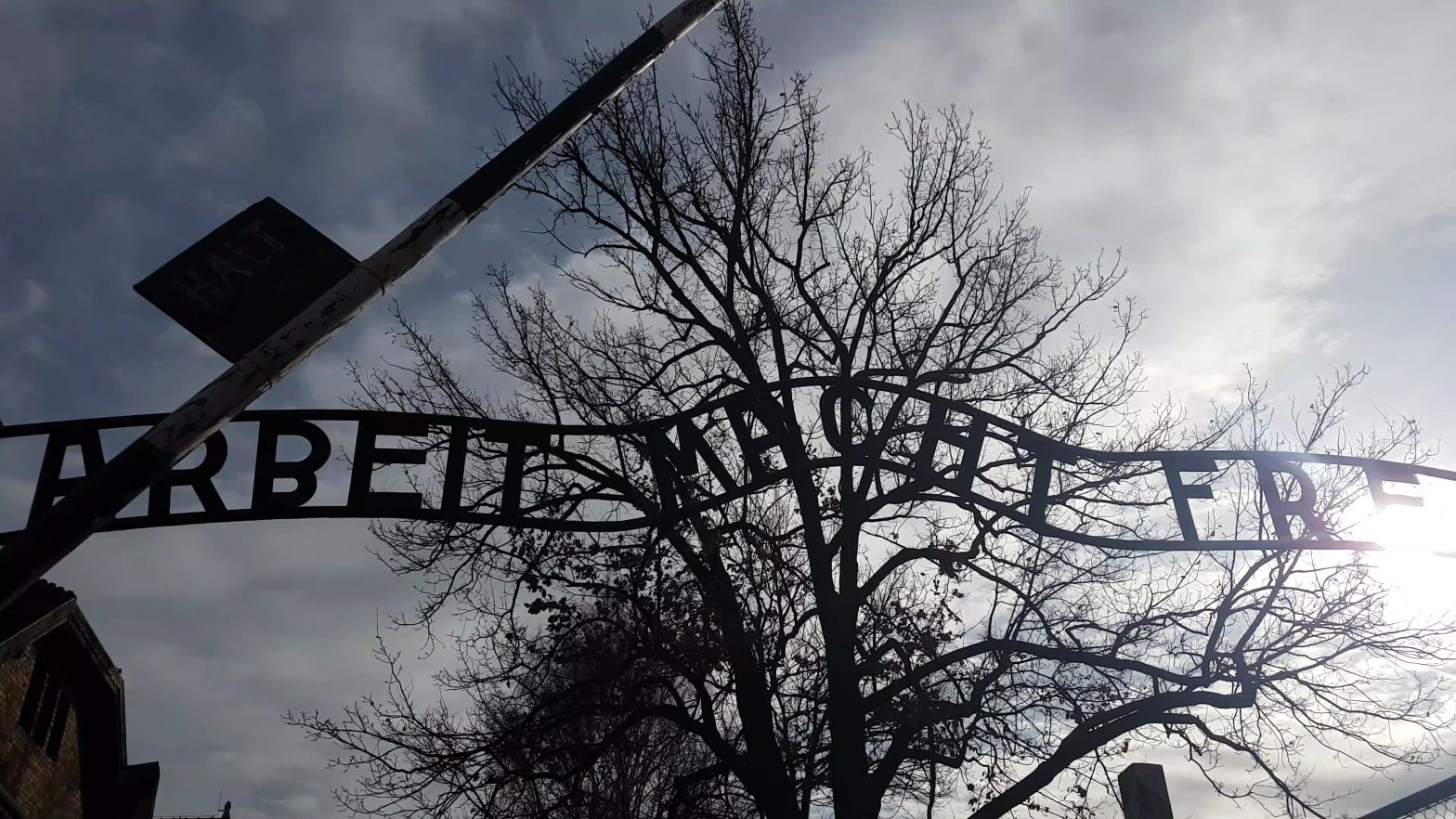
It is my second visit to Auschwitz Birkenau, and there are other places that typify the wickedness that lies beneath our lives, but none so great as this.
From the moment we are labelled by our guide to the moment we are summoned back on board our coach, the human condition that brought us here is foremost in my mind. We are shepherded reassuringly, as they were shepherded reassuringly. We too are addressed, instructed, guided, taken to barracks, cells and sites of extermination.
But they did not leave. Their normal lives had ended. As one of guards usually said, greeting prisoners newly arrived at Auschwitz 1 : “You will only exit through the chimney of the crematoria.”
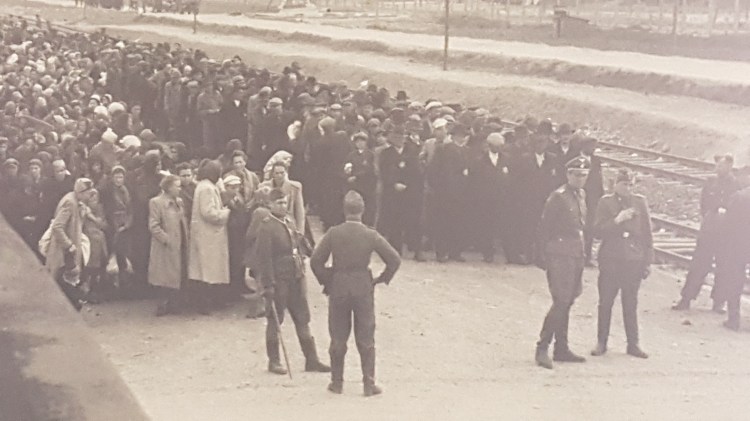
Today’s visit is warm and sunny. The barracks of Auschwitz 1 are orderly and cool. The sign “Arbeit Macht Frei” is one of promise, and not of blood and irony.
But it is inescapably wicked. To see the everyday order of an advanced industrial society putting its skills to such perveted use, and to think how close all countries came to anti-semitism then does not, as they say, bear thinking about.
Except it does.
Most places here are filled with evil every day. Or everyday evil.
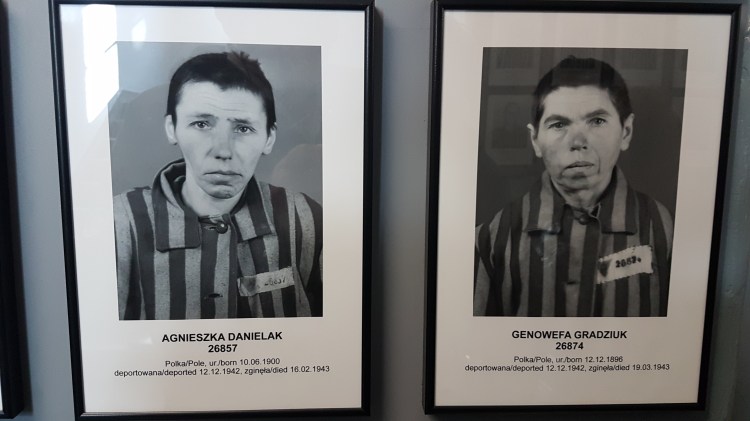
My particular nightmare is the photograph collection. Walls of staring portraist of named prisoners – mugshots, unsmiling, with and without hair, striped jackets, jobs, dates of birth. And dates of death, of ourse. The Germans were thorough and professional in the early days – when mainly Poles are brought here for their misdemeanours – and for being Poles.
Did they think because they were being logged and recorded, the Germans were not about to kill them in the end. Was that part of the insiduous reaassurance? Because they werre very good at that. Bring a suitcase, only 25K. Hang your clothes there and take a ticket. Come along here to the nice showers. Have a drink, you must be thirsty.
It is a terrible place. Poland is full of terrible places. And now its cities are calm. They are rebuilt. They can forgive.
But, in spite of a tendency to theme-park their prettiest locations, they also can remember.
So I will not go on about Birkenau – the extermination ground, the railway, the blown up crematoria and gas chambers. Visit yourself. As all German School children are made to do
Here is a list instead – and as if you were a Nazi school textbook in the thirties, I would encourage you to do the maths.
To murder 1.2 million people, what quantity of the following do you need?
tins of Zylon B cyanide, lengths of railway track, tons of concrete, tons of coal, number of guards, rolls of barbed wire, steam locomotives, cattle trucks, forms, pens, striped uniforms, cameras, tatooing ink & needles, pistols & rifles, bullets, weak and insubstantial broth, dirty and undrinkable water, timber, bricks, jackbooted officers, criminals in uniform, German industries hungry for cost-free labour.
And how much willing compliance do you need to put your answers into actions?
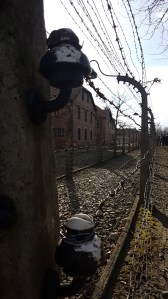
A million visitors every year answer or consider some or all of these questions.This camp has always been busy.
They put their own questions to over 200 guides, most of whom now have no connection with the Poland of the War.
Some of the visitors have other agendas.
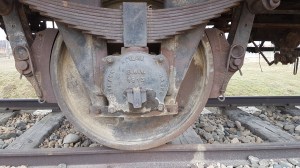
I wondered at the girls posing for selfies in front of the solitary railway wagon the museum affords to represent the thousands that were shunted onto the selection yard. They stood in front of the doors, with jokey fingers pointing to the lock, as their mobiles clicked.
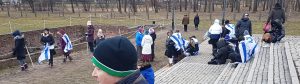
And at the Israeli school children wrapped in their national flags at the crematoria, peering down into the space where once people took of their clothes, as unprepared for death they went. Their teacher leader addressed them and their nationalism. I did not listen.
The Salt of the Earth
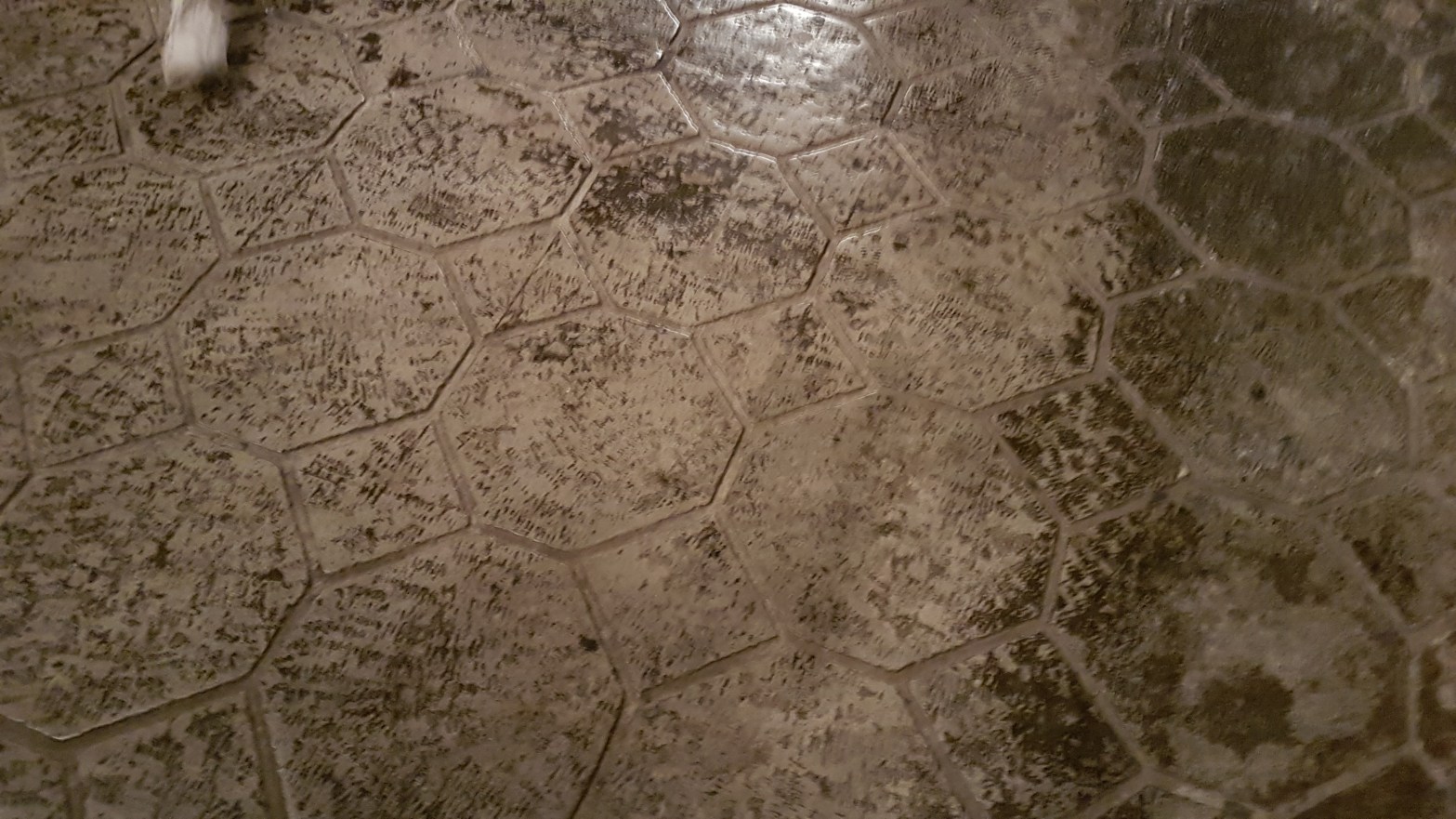
Almost as soon as we arrived our taxi driver was offering to take us to Krakow’s salt mine. Agreeing, we had only to wait 24 hours for the experience. By then we had worked out the fantastic margin Polish Adrian had built into the deal, but by then it was too late, and the prison cart had arrived.
We were unprepared for the size and scope of the mine at Wieliczka. Most of us had some experience of coal mines, either through museums in the UK or actual visits. Salt mines obviously in a different league.
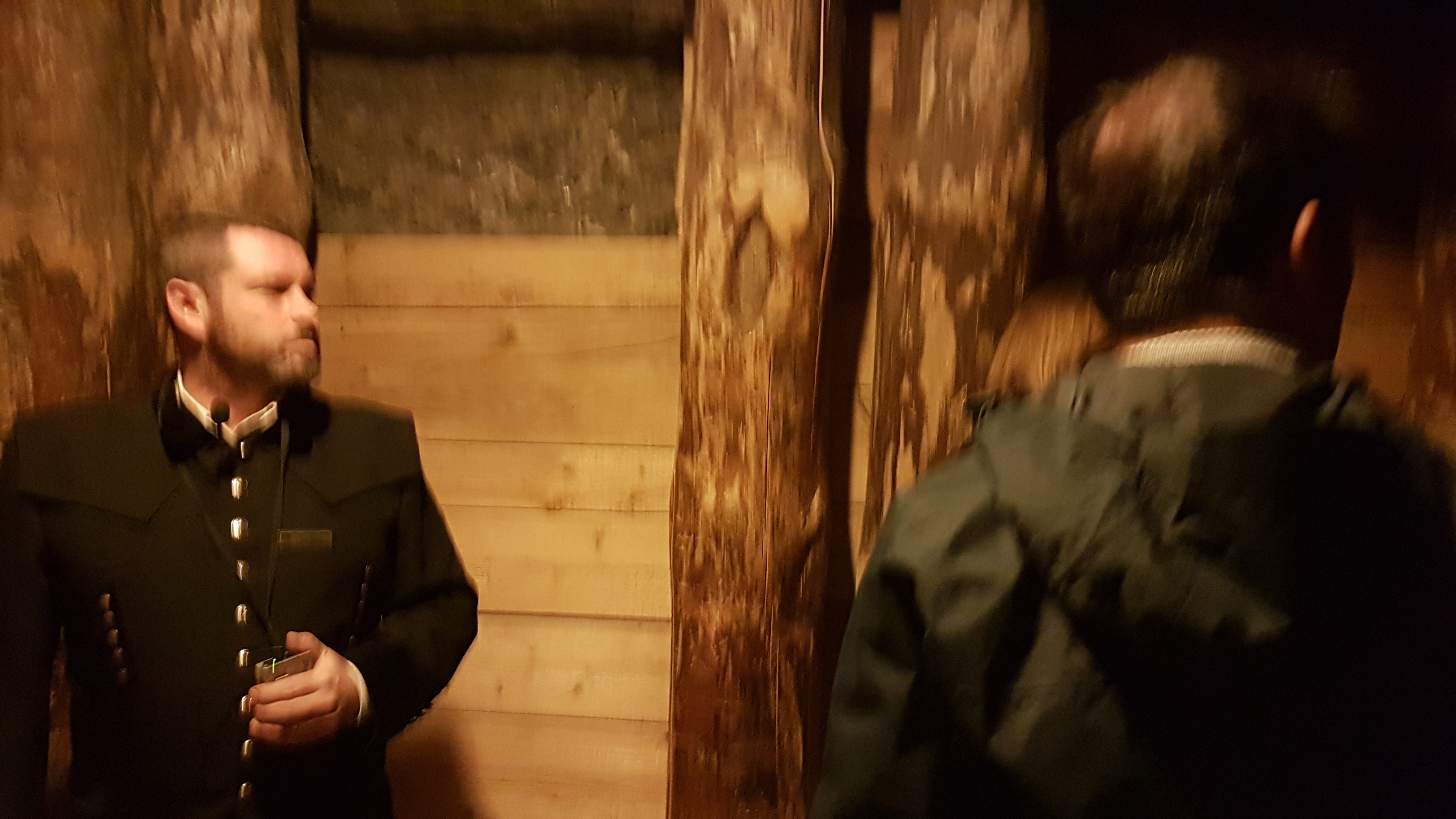
First there is the 400 step descent to the first level. Then there are the smooth walls of dark grey salt, matched by the roof and floor of the perfectly square tunnels. Then there are the airlocks that you pass through in order to control the ventilation system- large wooden doors that shut with a clunk after the last person through. Further twisting stairways wind down into the earth, taking in huge chambers of sizes ranging from the relatively domestic to the massively cathedral-like.
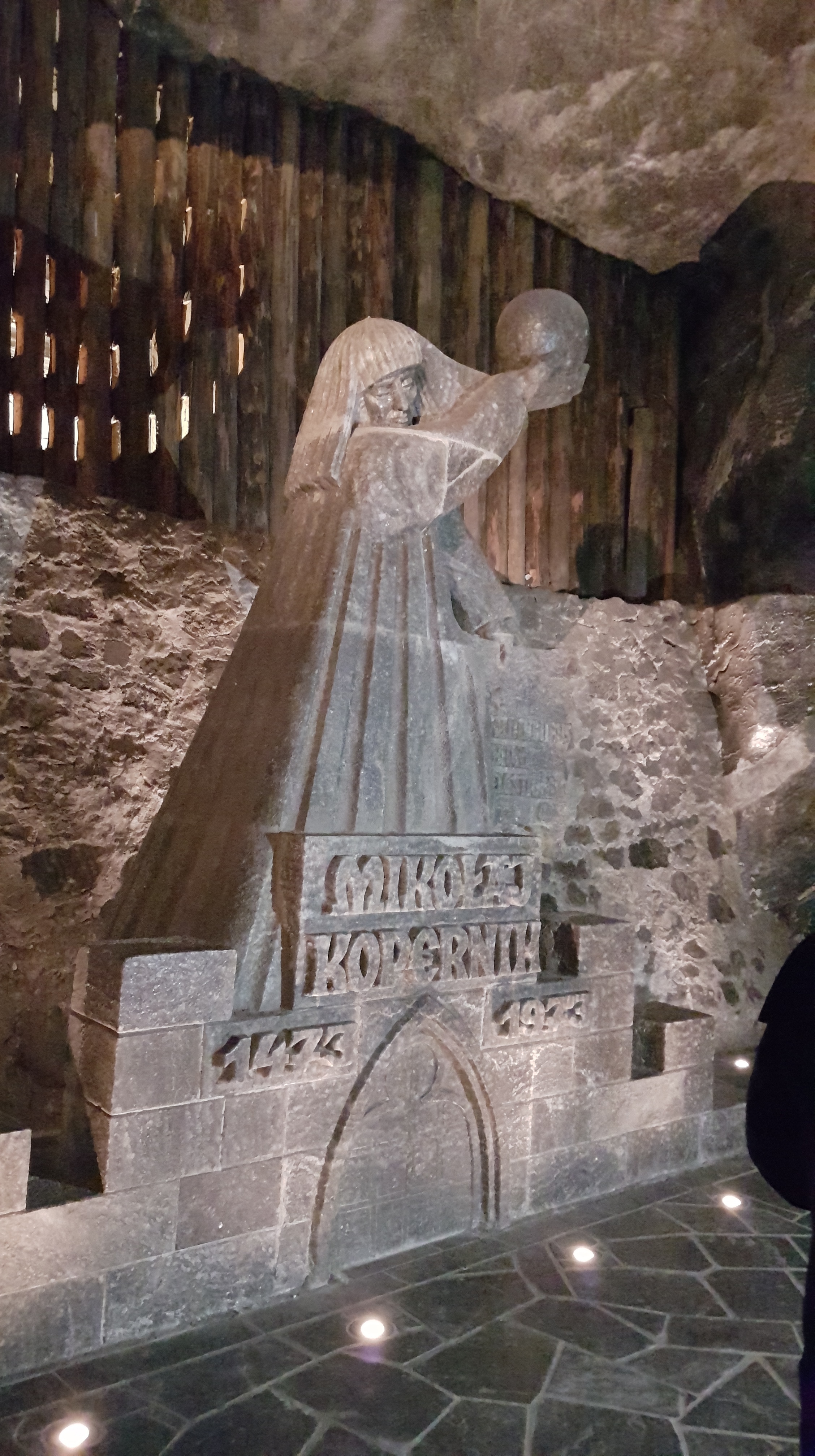
These latter were almost aways converted into cathedrals by mine workers who had chiselled biblical figures into the salt walls whenever the commercial extraction of salt had ceased. The ones without religious re-purposing had mysterious and ethereal in them, whose waters were either glass-still or churned by hidden pumps to create a drama as we pass.
Snatches of history are delivered by our guide, who hase worked as an attendant to tourists’ needs for 15 years, and is now chief of the operation. With many stairs, 9many times a day, he is enormously fit, and resplendent in a semi-military uniform.
We are astounded by the scale and scope of what we see – mines which have functioned since the 13th century, and which fomed the engine of Polish prosperity when salt was as valauble as silver, and was essential to the preservation of food throughout the year – they naturally now are vast. There are 5 levels – and we only see to level 3. The remains of modern equipment – electric railways, and so on – are occasional reminders that this was once a very busy place.
Now the salt no longer mined – and the operations here were ended in the 1960s because of subsidence. Teams of miners now work to backfill galleries that are collapsing. The current income is from visitors like us – and from weddings held in the chapels and cathedrals.
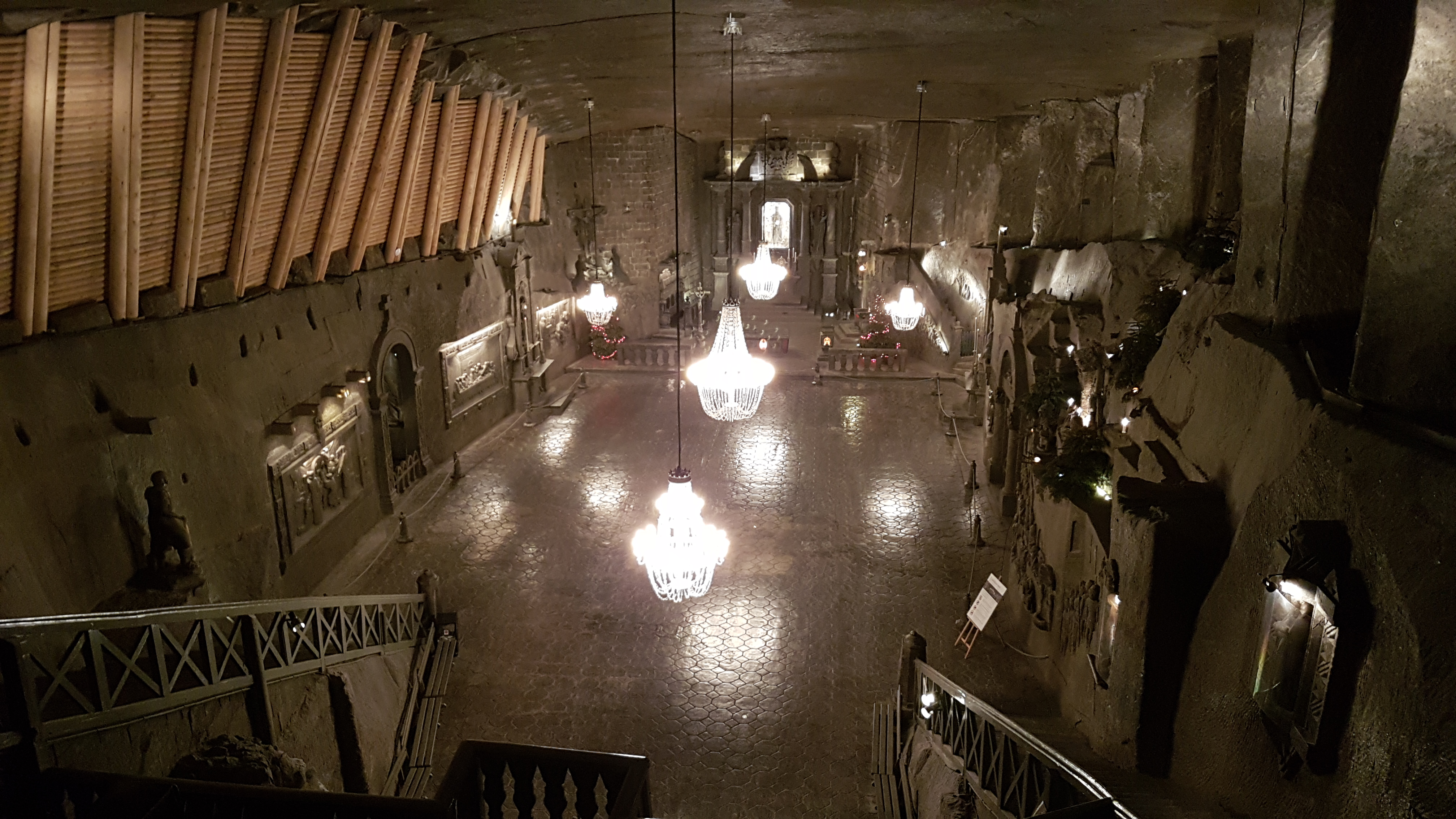
The abiding impression is that what was once a place of toil and wealth creation is now just a well-presented visitor attraction – where the work of the former centuries has been repackaged and cartoonised. Appropriately, the first gallery we are shown has been fitted out to resemble a scene from Snow White and the Seven Dwarfs. There is the occasional stuffed horse, and large wooden machinery the size of space rockets are made to turn which lift and pump – but who can guess what the space was like when it was what it was?
UK industrial history is presented differently – to convey the many life stories of the people at all levels who depended on the place and what it did. At Wieleczcka, there are only ghosts that hide as the doors open, and the clear evidence that work in Poland is never more important than Faith.
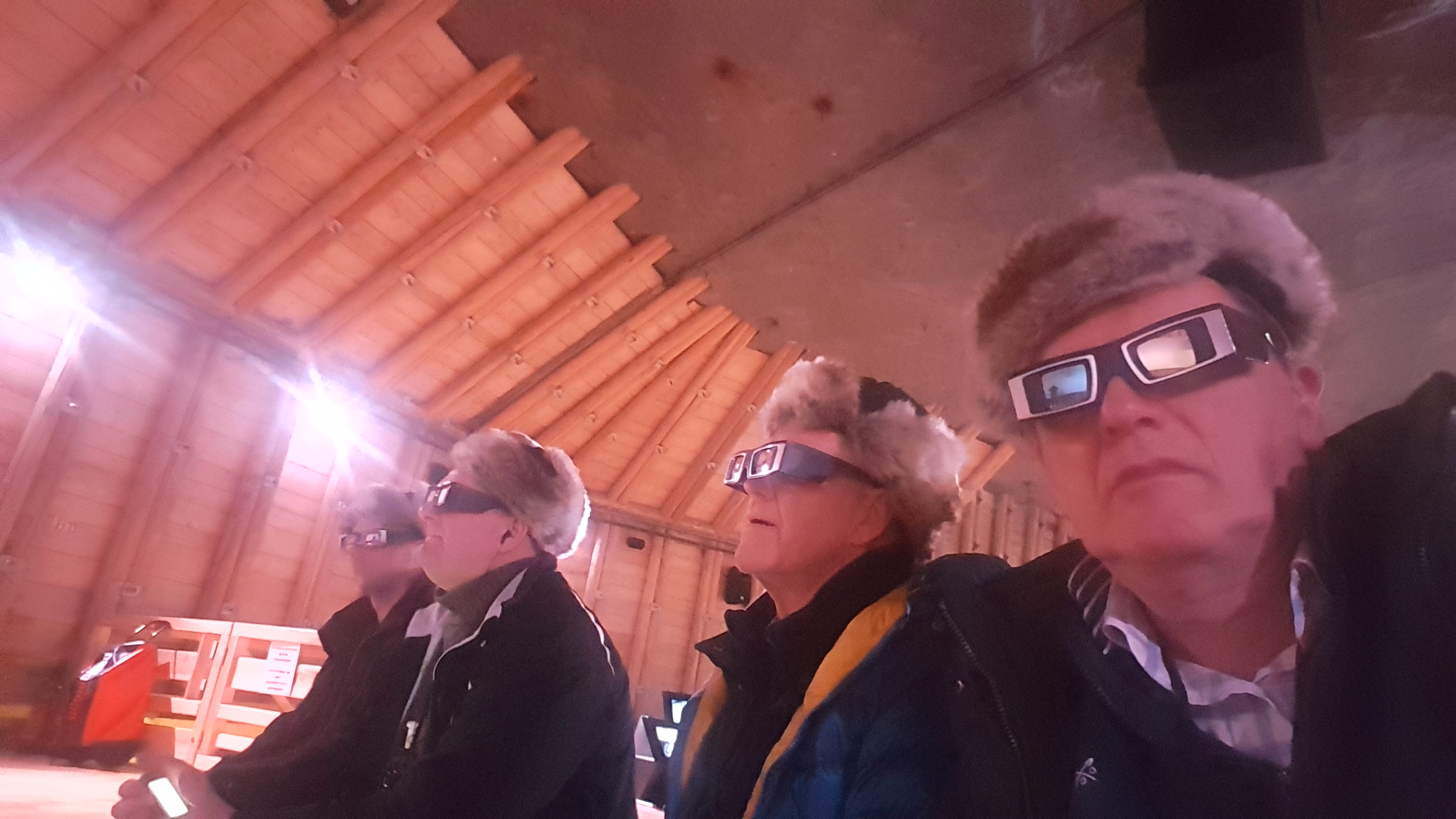
Our final journey is in a genuine miners’ lift. 3 tiny cages taking 8 at a time which are the real thing in mines the world over. For at least 2 of us, the trip to the surface is the most exciting experience of all!
A Tale of Three Cities
Our first daylight encouter with Krakow comes with a decision to tour by Hop Hop Bus. Via a tram, which only takes coins, which we don’t have, we fail to find one – but we do find an 8 seater golf buggy and its driver, Richard, which will take us round the three areas that make the city unique.
The electric cart takes on the old Jewish quarter first. Kazimierz was a city in its own right, and from the 15th Century up until 1941 it was home to Jewish families. Rich in synagogues, a market place, and monasteries, we weave round the streets which are, in winter, much quieter than the projected party image of the guide books would suggest. Here a former synagogue, there a home of Jewish poets, drones the pre-recorded guide Richard plays from his I-phone. And there is the remains of the old city wall………. We pass a large brick church which towers over the district – almost dominating the compact streets so well suited to our buggy. You want to go in? says Richard the driver – so we do.
It’s a gloomy morning, drizzle has kept our see-thru’ plastic sides rolled down, so we a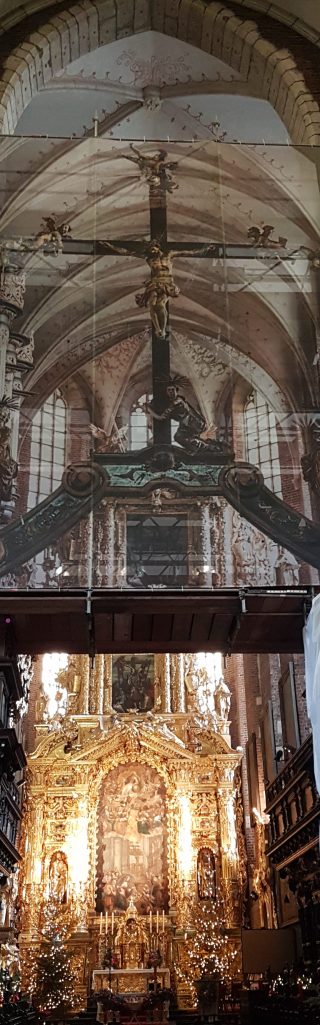 re surprised to find the east end of the building a blazing mass of gold. We are in Kozmierz’s parish church – Kosciol Bozega Ciala – or Corpus Christi Church, and a statement of Christian wealth and glory amidst this Jewish community that would be harder to equal. The body of the kirk is small – most English Parish churches would be larger, but it is wealthy, high and astonishing! One wall is stripped of its dark timbers, and underneath wall paintings of an earlier era emerge. A photo of its Central Crucifix hangs over the nave, the orginal absent for work or renovation, and almost escapes notice, so rich is the alter.
In a few minutes Richard deposits us at the last remaining operating Synagogue in the quarter. In contrast, it is small and modest – as befits the rules that govern Jewish houses of God. The women’s section modestly hides at the back behnd a lace curtain. It costs 10 zlotys each to enter, and nobody mentions the need to cover our heads, so we uncertanly remove our headgear. The collector listens to pop on his radio sips coffee, and nods us tolerantly in.
Outside, the Jewish cemetary is a place of pilgrimage, but we remain its sole visitors. Discarded fragments of gravestone form two “wailing walls”.
Before the War, 1/3 of Krakow’s citizens were Jewish. Only 8000 survived. Following their arrival in the city three days after the German invasion in Krakow in 1939, the Jewish population was evicted to the Ghetto on the other side of the Vistula. Nobody tells us what happened to the property stolen from its owners, though we know what happened to their lives.
Our 2nd city buggy destination is the Ghetto, which was instelf “liquidated” in 1943 when disease and starvation threatened the community. Nothing much remains, so our tour identifies where the gate where the “city” stood, and pauses at the main square, where stone chairs commemorate the furniture thrown onto the streets as the Nazis carried out their public health ethnic cleansing.
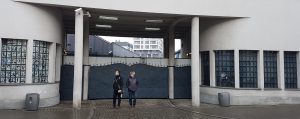 Round the corner, the buggy rattles up to Oskar Schindler’s famous factory, where 1500 jews were saved by his actions when he bought them from the SS – and though we stand outside and peer into the windows, we don’t go in. Richard gets up and fetches us leaflets from the museum desk inside. Nothing remains of the factory layout or machinery and the space is now a museum to the holocaust in the city.
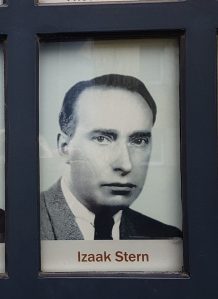 The photographs outside feature the Schindler Jews. Isaak Stern, his accountant – played by the charismatic Ben Kingsley in Spielberg’s Film – could be anyone – just as anyone could be sent to their deaths, and anyone could step into the role of executioner and torturer.
We conclude our tour with the Old city itself, which we have already walked through – its buildings are mercantile and commercial, and we are grateful that they seem to be home to restaurants that share the secrets of Polish cooking. It’s a pity only plumbers and builders come to the UK.
With that, we rush back to the hotel – to meet our fate in the Krakow saltmines in the afternoon.
Krakow Awakes….
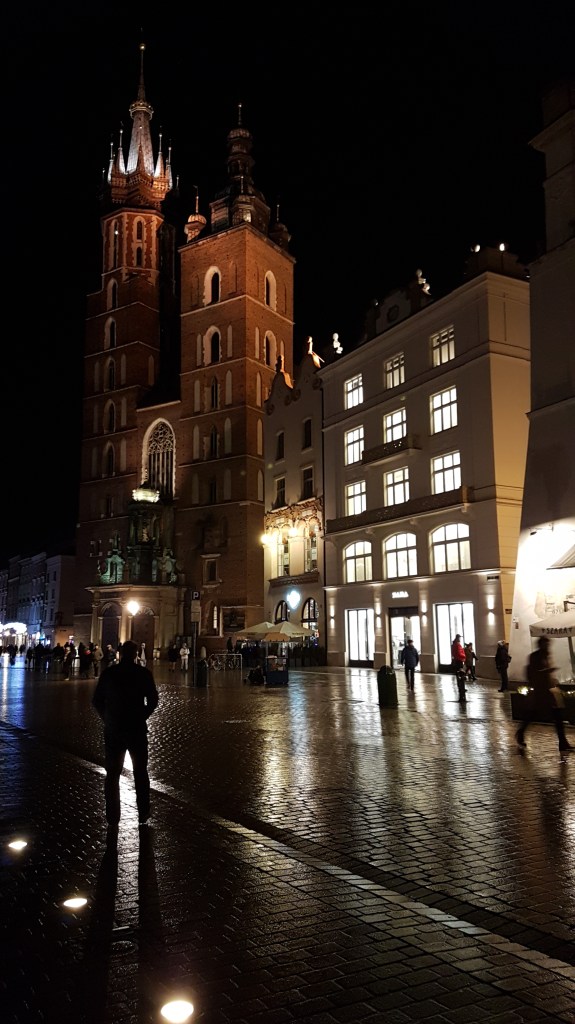
Arriving in Krakow – multiple spellings depending on whose army is in occupation – our Ryanair 737 joins a long line of Presidential jets on the apron. Germany’s is the largest. They are here because today is the 75th anniversary of the Russian liberation of Auschwitz – or Oswiecim if Poland had not been invaded in 1939.
You have to hand it to the German nation – to have destroyed Europe and rebuilt it again in a century, and to be first in line on such an anniversary. Mrs Merkel recently paid her first visit to Auschwitz. I don’t know whether these observations are ironic or not. Matthew, our Taxi driver, says that it is all in the past. Germans have nothing to repay.
This sounds like dangerous talk to me, though young Matthew, studying Logistics at university, and temping as a taxi driver, is too young to be burdened by history, or his parents’ sufferings, or their past crimes.
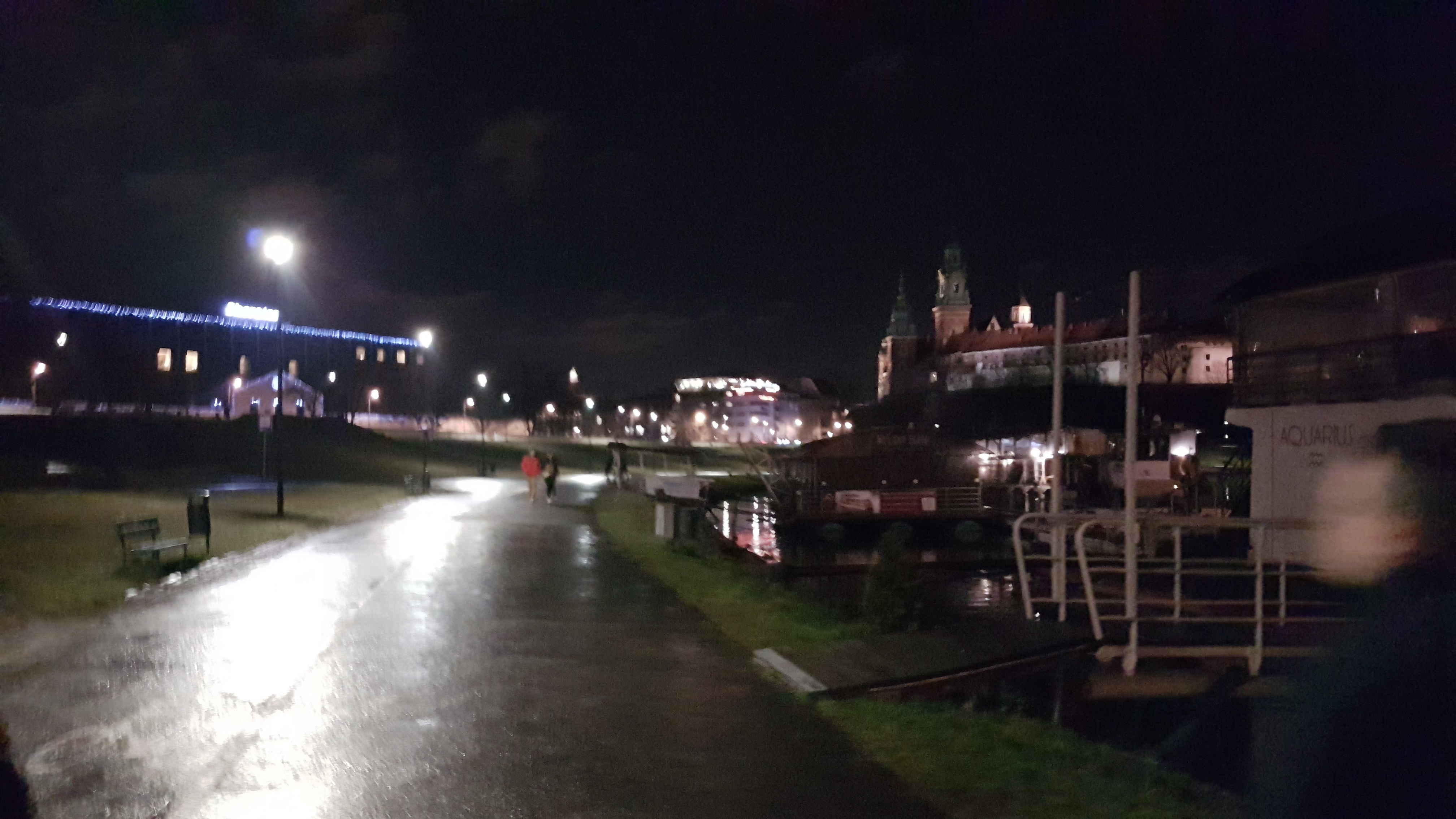
We take a walk. Into the city via the Vistula whose misty banks lead to the heart of the City and the towering presence of the Wawel – part citadel, and mediaeval city centre. Swans are active, practicing lengthy takeoffs on the glassy river. Couples in hi-viz jog along deserted banks.
As we walk through the immaculate old city to the Market Square, sirens echo down the chasms of the streets. We like to think it’s another head of state leaving for the airport, or if not too well known, for one of the many night clubs hiding under Kracow’s respectable skirts.
They’re very cultured these folk – we’re continually asked if we want to see Polish dancers. We assume that’s what they mean by Poles.